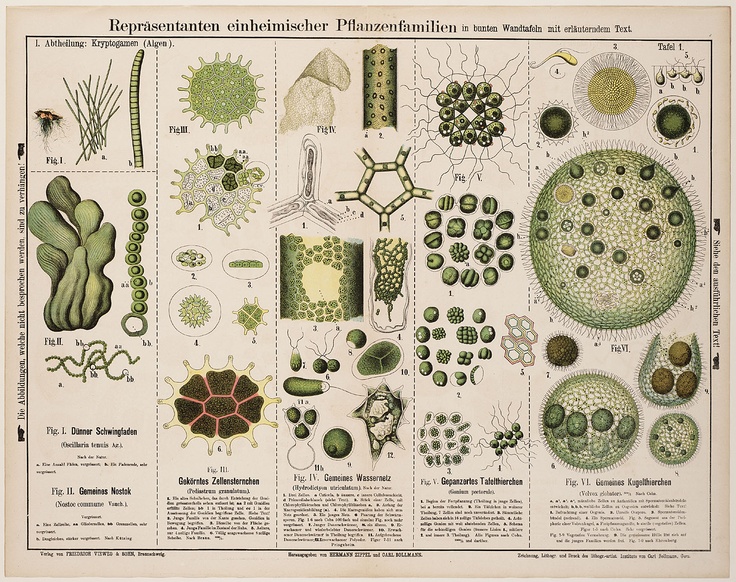
The Second Great Lesson involves the coming of life. This lesson revolves around the Timeline of Life, a long chart with pictures and information about microorganisms, plants, and animals that have lived (or now live) on the earth. The great diversity of life is emphasized, and special care is paid to the “jobs” that each living thing does to contribute to life on earth.
This lesson leads to the study of:
Biology: cells, organized groups, five kingdoms, specimens, dissection, observation, use of microscope
Botany: study of plants, classification, functions, parts of plants (seed, fruit, leaf, stem, root, flower), types of plants
First Great Lesson – Coming of the Universe and the Earth
The First Great Lesson is the most memorable and is often done on the very first day of school. It involves the use of a balloon and gold stars to tell the story of the beginning of the universe. This lesson also includes some demonstrations using solids and liquids to show how the continents and oceans first came together.
This lesson leads to the study of:
Astronomy: solar system, stars, galaxies, comets, constellations
Meteorology: wind, currents, weather, fronts, erosion, water cycle, clouds, glaciers
Chemistry: states of matter, changes, mixtures, reactions, elements, atoms, periodic table, compounds, molecules, chemical formulas, equations, lab work, experimentation
Geology: types of rocks, minerals, land forms, volcanoes, earthquakes, plate tectonics, ice ages, eras of the earth
Geography: maps, globes, latitude/longitude, climates, land/water form names, continent and country research
Origins of the Universe pic
Maria Montessori was devoutly religious, and brought many of her beliefs into the Great Lessons. These lessons came about back when religious beliefs were an accepted, natural part of everyday life (including schools). Things are different today, and if you are teaching at a school, you’ll probably want to stick to a factual account of the beginning of the universe (see the end of this post for some resources); if you’re at home, you can feel free to tailor the lesson to your own family’s religious beliefs. The story is inspirational to children no matter which version they hear. (See photo: origins of the universe)
One of our favorite reasons to keep your child in Montessori at least through lower Elementary (grades 1-3):
The Five Great Lessons of the Elementary Curriculum
The Great Lessons are an important and unique part of the Montessori curriculum. These lessons are bold, exciting, and are designed to awaken a child’s imagination and curiosity. The child should be struck with the wonder of creation, thrilled with new ideas, and awed by the inventiveness and innovation that is part of the human spirit.
The Five Great Lessons are traditionally presented in lower elementary (grades 1-3), and are presented every year so that children see them more than one time. Unlike the 3-6 environment, where the child is introduced first to “small” ideas that gradually widen into larger concepts, the elementary child is introduced right away to large concepts – the largest of all being the beginning of the universe. Then they can be shown how all the smaller ideas fit into the larger framework.
Traditionally, there are Five Great Lessons that are used to paint a broad picture before moving to more specific study. They consist of:
First Great Lesson – Coming of the Universe and the Earth
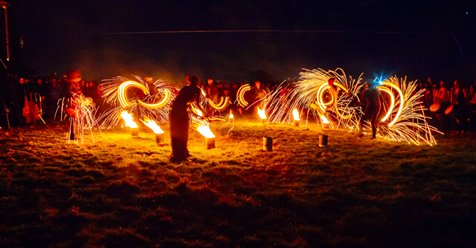
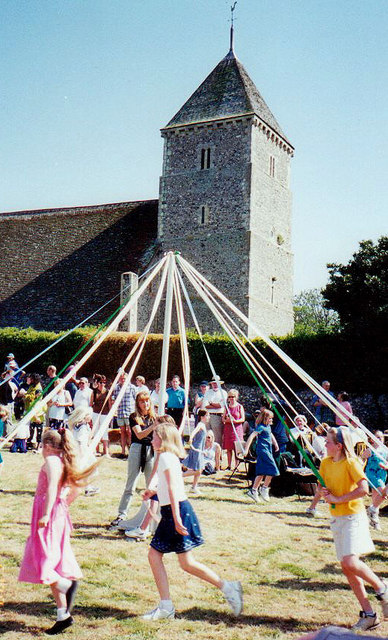
Beltane is mentioned in some of the earliest Irish literature, and it is associated with important events in Irish mythology. It marked the beginning of summer and was when cattle were driven out to the summer pastures. Rituals were performed to protect the cattle, crops and people, and to encourage growth. Special bonfires were kindled, and their flames, smoke and ashes were deemed to have protective powers. The people and their cattle would walk around the bonfire or between two bonfires, and sometimes leap over the flames or embers. All household fires would be doused and then re-lit from the Beltane bonfire. These gatherings would be accompanied by a feast, and some of the food and drink would be offered to the aos sí. Doors, windows, byres and the cattle themselves would be decorated with yellow May flowers, perhaps because they evoked fire. In parts of Ireland, people would make a May Bush: a thorn bush decorated with flowers, ribbons and bright shells. Holy wells were also visited, while Beltane dew was thought to bring beauty and maintain youthfulness. Many of these customs were part of May Day or Midsummer festivals in other parts of Great Britain and Europe.
Beltane celebrations had largely died out by the mid-20th century, although some of its customs continued and in some places it has been revived as a cultural event. Since the late 20th century, Celtic neopagans and Wiccans have observed Beltane, or something based on it, as a religious holiday. Neopagans in the Southern Hemisphere often celebrate Beltane at the other end of the year (around 1 November).
Screen time, in its multiple forms, will be part of your children’s lives at some point. But parents must ask themselves how early and to what extent?
AN EDUCATIONAL EDGE?
Some parents think they’re giving their child an educational edge like Susan who bought her 6-year-old son John an iPad when he was in first grade. “She thought, ‘Why not let him get a jump on things?’ John’s school had begun using the devices with younger and younger grades – and his technology teacher had raved about their educational benefits.
Dr. Nicholas Kardaras, one of the country’s foremost addiction experts who counseled Susan and her son John, writes, “She started giving John screen time to play different educational games on his iPad. Soon, he discovered Minecraft, which a teacher assured was “just like electronic Lego.” She remembered how much fun she had as a child building Legos. At first, Susan was pleased. John seemed engaged in creative play. She did notice that the game wasn’t quite like the Legos she remembered – after all, she didn’t have to kill animals and find rare minerals to survive and get to the next level with her old game. But the school even had a Minecraft club, so how bad could it be?”
“John became more and more focused on his digital game, losing interest in baseball and reading while refusing to do his chores. As his behavior continued to deteriorate, Susan tried to take the game away but John threw temper tantrums. His outbursts were so severe that she gave in, still rationalizing to herself over and over again that “it’s educational.”
But it’s even worse than we think.
DOSE OF REALITY
There’s a line; cross it and parents may actually unintentionally be doing significantly more harm than good.
“Tablets are the ultimate shortcut tools: Unlike a mother reading a story to a child, for example, a smartphone-told story spoon-feeds images, words, and pictures all at once to a young reader. Rather than having to take the time to process a mother’s voice into words, visualize complete pictures and exert the mental effort to follow a story line, kids who follow stories on their smartphones get lazy. The device does the thinking for them, and as a result, their own cognitive muscles remain weak.” ~Liraz Margalit Ph.D
Digest the information below on screen time, even though it might feel uncomfortable, and arm yourself with the truth about the potential damage screen time is capable of imparting – particularly in a young, still-developing brain.
“There’s a reason Steve Jobs was a conscientiously low-tech parent. Silicon Valley tech executives and engineers enroll their kids in no-tech Montessori or Waldorf schools. Google founders Sergey Brin and Larry Page went to no-tech Montessori Schools, as did Amazon creator Jeff Bezos and Wikipedia founder Jimmy Wales.” (source)
SCREEN TIME, A DIGITAL DRUG
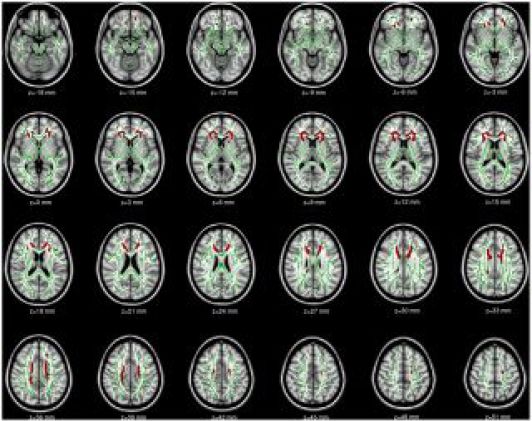
We now know that smartphones, iPads, and Xboxes are a form of digital drug. Recent brain imaging research is showing that they affect the brain’s frontal cortex – which controls executive functioning, including impulse control – in exactly the same way that cocaine does. Technology is so hyper-arousing that it raises dopamine levels — the feel-good neurotransmitter most involved in the addiction dynamic – as much as sex.
White matter changes – internet addiction
But what about kids who aren’t “addicted” per se?
Let’s be clear: Even in children with “regular” exposure, we should be aware that screen time is creating subtle damage considering the “average” child clocks in more than seven hours a day (Rideout 2010).
As a doctor, Dunckley observes that many of the children she sees suffer from sensory overload, lack of restorative sleep, and a hyper-aroused nervous system, regardless of diagnosis—what she calls electronic screen syndrome. These children are impulsive, moody, and can’t pay attention – much like the damage seen in these scans above. (source)
Make them wait! It is ok to have “I am bored“ time – this is the first step to creativity
Gradually increase the waiting time between “I want” and “I get”
Avoid technology use in cars and restaurants, and instead teach them waiting while talking and playing games
2. Don’t be afraid to set the limits. Kids need limits to grow happy and healthy.
Make a schedule for meal times, sleep times, technology time
Think of what is GOOD for them, not what they WANT/DON’T WANT. They are going to thank you for that later on in life.
Limit constant snacking. Parenting is a hard job.
3. Teach your child to do monotonous work from early years as it is the foundation for future “workability.”
Folding laundry, tidying up toys, hanging clothes, unpacking groceries, setting the table, making lunch, unpacking their lunch box, making their bed (source)
4. Have fun with your children.
Read aloud, wrestle with your kids, make a Mexican or Italian meal together, do a family game night or a treasure hunt in the house or yard. Push the table aside and dance with them, laugh about what they did when they were really little, take walks and look at the clouds! (source)
“Kids will change when parents change their perspective on parenting. Help your children succeed in life by training and strengthening their brain sooner rather than later!” ~ Victoria Prooday
Remember, parenting is about progress, not about perfection. You are reading about this because you are a parent who wants to do all you can to help and advance your child in the right direction.



 Our Village Montessori
 About Montessori
 Calendar
 Blog
Blog Admissions
 Contact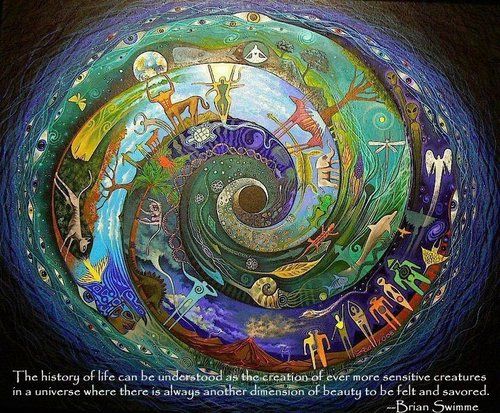


501.944.4483